

Our last Tales of Design Session was about unleashing creativity into the business world. Speaker Christopher Nguyen, Founder of UX Playbook, shared his experiential insights about growing in the design world. Here are six key takeaways from his session. Follow effort-impact matrix to create product roadmap A product roadmap is an essential tool used by product teams to prioritize their tasks. To make the most of this tool, one should prioritize tasks with the effort-impact matrix. It’s important to focus on initiatives that require the least effort and have the highest impact. Pro tip – Best practice is to have a buffer. Having some extra time built into the roadmap can help mitigate unexpected delays. Balancing business goals and user solutions To drive growth and customer satisfaction, a product designing team must create a balance between business goals and user needs. The first step to achieving this balance is prioritizing business needs and then molding the solutions for users to meet the business needs. As designers, you must bring data-backed solutions that resonate with the users and benefit the business. Don’t ignore the business aspect when creating a product A product is successful when it can generate high revenue. While creating a user-friendly product is essential, it’s equally important to consider the business aspect. Keep-up with design trends Staying updated with the latest design trends and tools is crucial to stay competitive in industry. The availability of online resources like tech podcasts such as The Verge, design-focused podcasts like Wireframe and design blogs like Design Details have made staying ahead the curve much easier. Future is about prompt engineering AI will revolutionize the design industry by reducing the time and effort to turn around projects quickly. It will help designers to design better and expand their imagination and bring even better projects to life with prompt engineering. Maintain work-life balance A healthy obsession with work is always good. And one should regulate work habits by taking required breaks. Your work might sometimes require a few extra hours, and getting a little obsessed with work can help you grow. But avoid burnout by taking pauses and relaxing a bit. Remember, it isn’t a one-day sprint, your work is a long run marathon.
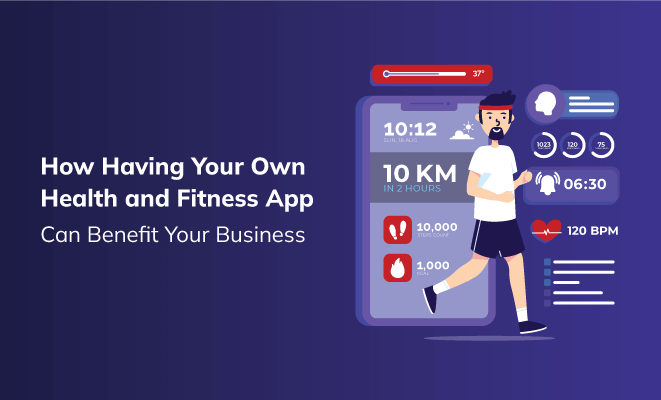
Health and fitness apps are experiencing a surge in popularity among businesses and customers alike. With a growing number of consumers using mobile devices to track their fitness goals and health habits, businesses can tap into this trend by offering customers their own customized apps. Health and fitness apps can provide a more personalized experience for businesses in health and wellness helping to build brand loyalty and create a sense of community around the brand. With a holistic approach to health, health and fitness apps can provide businesses with a unique and tailored experience that allows them to stand out in a crowded market. How COVID Crisis Accelerated Health and Fitness App Adoption The COVID-19 pandemic has accelerated the adoption of health and fitness apps, as more people turned to digital solutions to maintain their health and fitness. In 2020, App Annie’s State of Mobile 2021 Report estimated that over 71,000 health and fitness apps were launched globally during the Covid crisis. With gyms and fitness studios closed or operating at limited capacity, many consumers have started using health and fitness apps as a way to stay active and healthy from the comfort of their own homes. The increasing popularity of health and fitness apps among businesses and customers is driven by a range of factors, including the rise of mobile technology, the growing interest in health and fitness, and the impact of the COVID-19 pandemic. This surge in demand has had far-reaching effects, with businesses utilizing apps to manage their operations and customers benefiting from the convenience of easily accessible health and fitness resources. Benefits of Having a Health and Fitness App Customers can keep track of their progress, set and achieve goals, and stay motivated with health and fitness apps. By providing comprehensive and personalized solutions tailored to the individual needs of your customers, you can also benefit from having an app for your health and fitness business. It will lead to long-term loyalty and business growth by connecting you with customers and fostering relationships. Are you ready to take your brand presence into the digital realm in a way that goes beyond the ordinary? If so, it might be worthwhile to consider developing your own health and fitness app as a possible option. Taking this path will enable you to take advantage of a host of great benefits that will enable you to stand out from the crowd and succeed in the competitive health and fitness landscape. Whether you’re a personal trainer, gym owner, or wellness coach, having your own app can help you reach more people, boost engagement, and grow your business like never before. Why don’t we take a closer look at how your own health and fitness app can benefit your business? Here we go! Streamlining Operations: Health and fitness apps can help trainers and coaches streamline their workflow by providing a centralized platform for managing client information, scheduling appointments, and tracking progress. According to a survey conducted by Mindbody, 60% of gym members prefer booking their classes through a mobile app.Thus, health and fitness apps make it easier for trainers and coaches to manage their business by automating routine tasks like scheduling, reminders, and progress tracking. This enables trainers and coaches to spend more time on activities that are critical to their success, such as developing custom programs and providing personalized coaching. Increasing Reach Beyond Neighborhood: Trainers and coaches can reach audiences far beyond their neighborhoods with fitness apps. According to statistics, approximately 6 in 10 consumers use health and fitness apps on a daily basis, according to Morning Consult’s survey of more than 85,000 consumers. Consequently, trainers and coaches can effectively reach a larger audience than ever before by leveraging the power of fitness apps. This increased frequency of use indicates that these apps are becoming an integral part of people’s lives. This presents a great opportunity for businesses to reach consumers in a more effective and engaging way. As a bonus, this also represents a great opportunity for businesses to be better able to understand their customers’ needs and preferences in a more personalized way. Extracting Analyzing Data Insights: Health and fitness apps allow trainers and coaches to collect and analyze user data, providing insights into client behavior and helping to identify areas for improvement. A report published by App Annie in 2020 shows that mobile app usage in the health and fitness categories has risen by 30%. According to the report, the ever-increasing use of health and fitness apps has resulted in users consuming more data and consuming more wellness resources from apps. Having access to this data allows companies to tweak marketing strategies, improve operations, and optimize services based on customer behavior and engagement. Personalizing Services: Health and fitness apps allow trainers and coaches to provide more personalized and effective services to their clients by tailoring their advice and recommendations to each individual. These apps can help foster a greater connection between trainer and client, giving them the tools, they need to achieve their mutual goals faster. Personalizing health and fitness services can help to increase customer loyalty, as customers feel like the services are tailored specifically for them. Furthermore, personalized services have the potential to give businesses an edge over their competitors as customers tend to favor personalized services over generic ones as a result of increased user experience. Increasing Efficiency: According to recent research by Airship, 81% of respondents intend to use health and fitness apps in 2023 in an attempt to improve their health. As such, it is clear that health and fitness apps are becoming increasingly important and valuable in the modern world, and as a consequence, businesses in health and fitness are in a prime position to capitalize on this trend. A health and fitness app can help streamline processes, reduce overhead costs, and improve customer experience. By optimizing operational efficiency, the app can help to significantly improve the quality of service provided. This, in turn, enhances the user experience, bringing even more value to the customer. Improving Communication
In recent years, the rise in awareness surrounding mental health has led to the development of various digital interventions, including mental health applications. These applications offer a multitude of benefits for individuals seeking resources, support, and treatment options related to their mental health. The popularity of apps as a means of accessing mental health care has risen exponentially, with the number of apps available on the market continually increasing. However, due to the sheer volume of options and lack of stringent regulations, not all mental health apps are created equal. Designing and developing a mental health app with the potential to make a significant impact on an individual’s mental well-being requires a deep understanding of the nuances involved in creating a safe, effective, and user-friendly platform. In this Article, we will delve into the key aspects of designing an effective mental health app while exploring the key considerations to be taken care of in the process. Part 1: Identifying User Needs — Research & Planning Defining Your Target Audience Having a clear understanding of the target audience can be a great way to determine the features and functionalities that a prospective user base might be seeking in a mental health app. These features and functionalities should be aligned with the user’s requirements and expectations, thereby creating a positive user experience and ensuring the success of the app. Conducting Market Research Perform comprehensive market research to gain insights into current mental health trends, unmet user needs, and existing solutions within the app stores. Analyze the strengths and weaknesses of relevant apps, identify the gaps in the market, and use these insights to create an app that offers unique features and stands out from the competition. Collaborating With Professionals & Experts Seek input and feedback from mental health professionals and experts throughout the development process. They can provide valuable insights into disorder-specific symptoms, treatments, and coping strategies that should be incorporated into your app. Additionally, their professional endorsement can increase credibility and trust among users. Involving Users in the Design Process Involve actual users in the design process to ensure that the app meets their needs and expectations. This can be achieved through user interviews, focus groups, or beta testing. Gathering user feedback during the development phase will allow you to make necessary adjustments, thereby increasing the chances of success upon launch. Part 2: Design & Development – Ensuring Adoption and Retention Creating an Intuitive & Engaging User Interface Design a user interface that is visually appealing and easy to navigate. Users are more likely to engage with and continue using an app that provides a seamless experience. The app should be accessible to users of various ages, education levels, and mental health concerns, ensuring that the interface and language used are both clear and concise. Personalizing the User Experience Integrate personalization features in your app to tailor the experience to fit each user’s individual needs. This can include customizing the app based on user preferences, interests, and goals, as well as providing personalized feedback, suggestions, and resources. A personalized app is more likely to keep users engaged and motivated to continue using it over time. Incorporating Evidence-Based Techniques & Intervention Methods Ensure that the mental health techniques and intervention methods included in the app are based on scientific research and proven to be effective in treating mental health disorders. This not only increases the likelihood of the app being successful in helping users but also contributes to its credibility and trustworthiness. Tracking Progress & Providing Feedback Include features within the app that allow users to track their progress and receive feedback on their mental health journey. Having these features on the app can help users stay engaged with it and continuously take steps to improve their mental well-being as they use it. This feature can also provide users with a sense of accomplishment, as they can see the progress they are making with the app. Encouraging Social Support & Community Building Incorporate social support features in your app as they can play a crucial role in mental health recovery. This can include peer support groups, forums, or even gamification features that encourage users to share their progress and connect with others. Cross-platform Compatibility Ensure that your app is compatible with multiple platforms, such as iOS, Android, and the web, to reach a wider user base and provide a seamless experience across different devices. Additionally, make sure to optimize the app for different screen sizes and resolutions. Test it across different devices to ensure a smooth user experience. Part 3: Scientific Validation & Compliance Testing the Clinical Validity of the App The clinical validity of an app is arguably the most critical component of its scientific validation since it measures how accurately it helps users with their mental health. To ensure the reliability of the data provided, mental health apps must go through meticulous testing and validation procedures such as peer review and user testing to ensure accuracy. Maintaining the Accuracy of the App Data Accuracy is essential for ensuring that mental health apps provide reliable and valid data. This can be achieved through rigorous testing and validation processes such as peer review and user testing. To ensure the best outcomes, accuracy must be prioritized throughout all development phases, from initial design to final implementation. Promising Privacy and Security Protecting user data is a key concern for mental health apps. Apps should be designed with robust security measures such as user authentication and encryption to ensure that user data remains secure. Furthermore, user data should be stored on secure servers that are regularly backed up and monitored for any potential security breaches. Adhering to Ethical Standards Mental health apps should adhere to ethical standards such as informed consent, data privacy and security, and data storage. In order to uphold these ethical standards, mental health apps must be designed, maintained, and managed with the utmost care and diligence. Apps should be regularly assessed to ensure they function properly and meet ethical standards. Ensuring HIPAA
1 in 5 US adults suffer from a mental health issue, and nearly 1 in 25 submits to serious mental health suffering, as exposed in statistics revealed by the Centers for Disease Control and Prevention. As of 2023, a total of 270 million, i.e., 81.6% of America’s population own a smartphone—a recent finding according to a tech survey on smartphone users reveal so. At the intersection of these health and tech statistics are the mental health apps which brought about an easy and accessible in-pocket platform to virtual healing—to the ones seeking support during the time of mental or psychological crisis. Technology, as we see it penetrating down deep into almost every orbit of human existence, has significantly charged up the idea of utilizing mobile phones as a utility to combat mental health sufferings. This, in the follow-up, has given an impetus to mental health entrepreneurs to capitalize on an opportunity backed by—mobile health apps—while allowing them to serve the noble cause of helping the community struggling to conquer mental maladies, i.e., the psychological disorders that lead to mental instabilities, stress, anxieties, depression, etc. II. Overview of Mental Health Apps Mental health apps are mobile applications aimed to help and heal people struggling with mental catastrophes, i.e., anxieties, depression, mood, personality, and psychotic disorders. From mood tracking to stress management and educational resources to access to mental health professionals, mental health apps can offer users with a bouquet of utilities to plan personalized mental health care regimen. The convenience and accessibility of these apps have made these tools popular among individuals seeking mental health support. An estimated 20,000+ mental health apps are available on major app stores, primarily the Google’s Play Store and Apple’s App Store—as reported by the National Library of Medicine. The statistics show the rising popularity of mental health applications and the increased scope of leveraging digital technology to increase the reach of mental health services. It has become apparent that mobile-based applications are capable of bringing a wealth of resources and mental health services to users who wish to manage their mental well-being and stress at their convenience. Digital tools being handier with increased accessibility of mobile phones, mental health professionals can leverage the potential of mental health apps to expand their reach and provide a more holistic support system for their clients. III. Goals and Objectives of the Guide If you are an entrepreneur planning to enter into a healthtech venture powered by a mental health app, you can greatly benefit from this mental health app development guide. Here we offer a comprehensive roadmap to navigate the complex landscape of mental health app development, from the conceptualization phase to launch and beyond. Precedence Research, a leading data research company, forecasted the valuation of the mental health market to be around $19.6 billion by 2030 with a CAGR of 18.06%. If you are an entrepreneur looking to grab your pie of profit from this swiftly surging market with your own mental health app, you may be interested in learning about what it takes to develop a successful mental health app. Digital Innovation brings you this detail-attentive mental health app development guide to steer your entrepreneurial path to success with your mental health app. From conceptualization to submitting the app to the app store, this knowledge book sheds light on every key step involved in the process. As you leaf through the guide, you will have a better idea of what goes into designing and developing a mental health app customized to your needs and in line with the preferences of your target users. Market Research and Analysis It is important to know your target market’s demographic, psychographic, and behavioral characteristics in order to develop a mental health app that targets them. This may require you to dive into the demographics of the prospects interested in using your mental health app. From remote and underserved populations to young adults and busy professionals, parents and caregivers to individuals with specific mental health conditions — you need to decide who your target audience is. The target market can vary based on the app’s unique features and goals. The services, the features and the functionalities you want to integrate into your mental health app make important additions to the chart when determining the initial outline of your mental health app. The major apps these days offer features such as meditation and mindfulness exercises, sleep trackers, mood diaries, self-care strategies, stress management techniques, general mental health education, and access to professionals for remote consultation. Based on the audience you are willing to approach and the type of features and functionalities you desire to be within the app, you can determine how the final version of your mental health app will look like. Now when you finalize your audience and the services you think your audience can benefit from, it is recommended to engage a mental health app development company to assist you with the initial prototype of the app. Analyzing Competition and Opportunities for Your Mental Health App in the Market The competition analysis of the market and the opportunities it may offer to your mental health app is a significant part of the app development process. It will help you understand the landscape and positioning of your mental health application. Here is what you need to look for when analyzing the competition and opportunities for your mental health app in the market: I. Identify Competitors It involves finding the applications offering similar features, functionalities, and services you intend to incorporate into your mental health application. Assessing the strengths, weaknesses, user reviews, and pricing model of the competition will help you with insights into what will possibly work for the success of your mental health. II. Evaluate Your Unique Selling Points Determine what sets your mental health app apart from the competition. Assess its unique features, benefits, and value proposition. Highlight how your app addresses user pain points better than existing solutions or provides innovative features that differentiate it from competitors. III. Analyze Market Trends Stay up
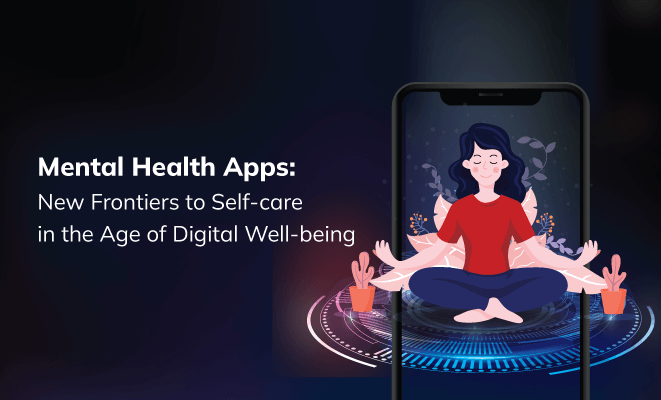
As the mental health care industry has continued to evolve over the past few years, mental health apps have gained traction among the two sides of the industry, i.e., ones who provide mental health care, i.e., mental health coaches and counselors and the ones seeking mental health care, i.e., the patients. Technology integration powered by mental health apps is facilitating the accessibility and ease of mental health care for individuals. Mental health clinics and counseling centers can utilize this trend to create new revenue streams by serving a diverse clientele in a convenient virtual setting. We build apps that are intuitive and engaging. Seems you need one. A New Revenue Stream with Mental Health Apps Businesses in mental health and psychiatric well-being are investing in mental health apps to help people cope with stress, anxiety, and depression. The demand for such apps has grown since the start of the pandemic, as people search for ways to manage their mental wellbeing. Mental health apps are becoming increasingly popular and have the potential to generate a new revenue stream for your healthcare business. Based on recent studies, it has been estimated that more than 225 million people in the United States and more than 2 billion people worldwide use mental health applications. The global mental health app market is growing rapidly, and it is expected to reach $3.9 billion by 2025. This reflects the growing trend of people turning to technology for mental health support and the potential for mental health app development to revolutionize the way mental health care is delivered. Mental Health Apps Hold the Future of Mental Health Mental health apps can offer a powerful opportunity to provide more accessible and equitable mental health support, and with the continued development of such applications, the potential to improve the lives of millions of individuals across the world is immense. Moreover, mental health apps have the potential to bridge the gap between medical professionals and those struggling with mental health issues, ultimately improving access to care and providing necessary support. As a result of the mental health apps on the market, there is a bright future ahead for those practicing mental health care and those seeking support for mental health. The idea behind mental health apps is to provide the user with the tools and resources they require in order to manage their mental health. Besides providing self-care support, mental health apps can help individuals identify and manage symptoms of mental illness via remote consultation with experts in mental health wellbeing. We build apps that are intuitive and engaging. Seems you need one. Advantages Mental Health Apps can Derive for Your Mental Health Clinic The advent of technology has brought about a new frontier in mental health care in the form of mental health apps. These apps have the potential to revolutionize the way people access and manage mental health care and the way mental health care coaches and counselors deliver the care. It goes without saying that these apps can improve mental health outcomes in an unprecedented way. As technology penetrates mental health and psychological well-being through mental health app development, mental health professionals and patients have access to a more streamlined virtual platform and digital resources than ever before. Consequently, this resulted in mental health professionals being able to provide patients with more comprehensive and individualized care and a whole host of other benefits. Here we highlight some of the common advantages of a mental health app that coaches and counselors can derive for maneuvering their services: Improved Access to Mental Health Care Mental health apps provide an opportunity for mental health professionals to improve access to mental health care. With mental health apps, users can access therapy, counseling, and support from anywhere at any time. This can be especially beneficial for those who may not have access to traditional mental health services due to geographical or financial limitations. Mental health professionals can now reach a wider range of clients through mental health apps, providing them with the care they need. Expanded Reach for Mental Health Education and Prevention Mental health apps provide an opportunity for mental health professionals to expand their reach for mental health education and prevention. Mental health apps can be used to provide clients with educational resources on mental health topics. Mental health apps can also be used to provide clients with preventive measures to reduce the risk of mental health issues. By using mental health apps for education and prevention, mental health professionals can reach a wider audience and help individuals before they require intensive mental health services. Increased Efficiency in Mental Health Care Mental health apps can provide an opportunity for mental health professionals to increase efficiency in mental health care. Mental health apps can be used to automate certain aspects of mental health care, such as scheduling appointments and reminders. This can free up mental health professionals’ time, allowing them to focus on providing high-quality care to their clients. Mental health apps can also be used to provide clients with resources and support between appointments, reducing the need for frequent in-person appointments. Personalized Treatment Plans Mental health apps offer an opportunity for mental health professionals to customize treatment plans for their clients. Mental health apps can be tailored to meet the specific needs of each individual client. This allows mental health professionals to provide personalized care and support to their clients. Mental health apps can also be used to track the progress of clients, allowing mental health professionals to adjust treatment plans as needed. Design, develop, and deploy your Mental Health App with us. Picking the Right App Developer for Your Mental Health App Development Experts at Deloitte, a leading consulting firm, have revealed in a recently released note that mental health apps can particularly benefit diverse populations by making mental health support more accessible—and—by providing an opportunity for people to connect with mental health professionals in a more private and anonymous setting. The key to success in the virtual world of mental
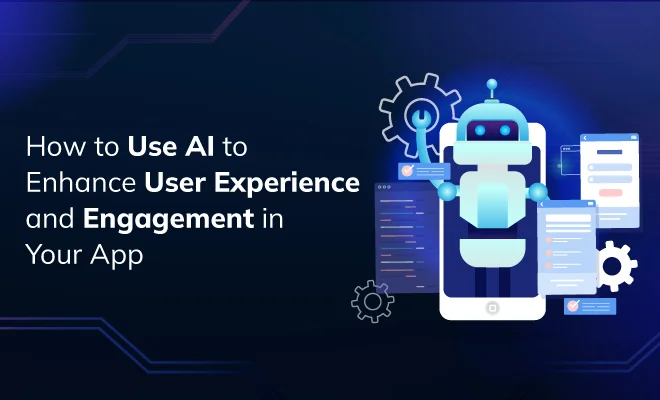
In the fast-paced app development world, fierce competition and rising user expectations make personalized UX and user engagement crucial. AI technology helps apps seamlessly adapt to users’ needs by analyzing their behavior, preferences, and feedback. This not only enhances the user experience but also leads to improved user retention and loyalty. A renowned tech research expert Bergur Thormundsson predicts significant growth for the global AI software market in the upcoming years. He anticipated the AI software market to reach an impressive $126 billion by 2025. The shift from features to user-centric experiences has revolutionized app and software development, putting AI at the forefront. AI Unlocks a New Era of Personalized User Experience According to a Forbes report, 65% of consumers express continued trust in businesses and entrepreneurs utilizing AI. This emphasizes the growing acceptance of AI in enhancing user experiences and solidifying consumer-business relationships. App developers employ a range of AI techniques to personalize user experiences while developing mobile applications for diverse industries. AI Techniques for Personalizing User Experience Through a combination of techniques such as data mining, pattern recognition, and machine learning, AI algorithms are capable of tracing the digital footprints users leave behind. Thus, AI app development can cater to users’ preferences while also anticipating what they might want next. Here are some techniques an app entrepreneur can utilize AI to analyze or decode user behavior to personalize user experiences: I. Data Tracking and Analysis AI algorithms track and analyze user interactions, such as clicks, searches, and time spent on various parts of the app. By understanding these patterns, the algorithms identify user preferences and interests. II. Predictive Analytics AI-empowered predictive analytics decode user behavior, uncovering patterns and preferences. This insight fuels tailored recommendations, improving user engagement. III. User Profiling AI-empowered automated user profiling can enable an app to segment users into different groups, like “Tech Enthusiasts,” “Fashionistas,” or “Home Decor Shoppers.” This not only helps the app to capture user behavior but also assists users to find the content of their interests and preferences. IV. Pattern Recognition AI algorithms use advanced pattern recognition techniques to identify trends and associations within the user’s behavior. This helps in predicting what type of content the user is likely to engage with in the future. V. Content Analysis AI algorithms analyze the content itself, identifying keywords, themes, and attributes. By comparing this analysis with user behaviors, the algorithms can recommend content that aligns with the user’s interests. VI. Machine Learning Models AI algorithms use machine learning models to continuously learn from user interactions. These models become more accurate over time, adapting to changes in user behavior and delivering increasingly relevant content recommendations. Chatbots and Virtual Assistants for Real-time Interaction Chatbots and virtual assistants, powered by Artificial Intelligence (AI), are changing the game in app development by offering instant engagement and assistance. Whether it’s answering queries, providing recommendations, or guiding users through complex tasks, these AI-driven tools ensure users feel connected and supported at all times. Here is how chatbots and virtual assistants can enhance user experience: 1. AI-powered Chatbots AI-powered chatbots are revolutionizing online user interaction. Financial institutions employ chatbots to provide personalized financial advice. E-commerce platforms utilize AI bots to offer personalized product recommendations. Many other businesses deploy AI-powered chatbots to provide immediate customer support. Requesting your app developer to implement an AI chatbot in your app can lead to improved user interactions and smooth digital experience. 2. Virtual Assistants for Improved App Experience AI-powered virtual assistants can learn from user behaviors and interactions, adapting their responses and recommendations accordingly. A virtual assistant, for instance, in a food delivery app takes orders, suggests menu items, and tracks delivery status. Leveraging the expertise of an app development company allows for the integration of virtual assistants, resulting in better user engagement and an improved app experience. Enhancing UI/UX Design through AI AI ensures inclusivity, refines designs, and adapts interfaces, resulting in a more engaging and user-centric app experience. An app development company can employ AI to enhance UI/UX design by analyzing user data, predicting behaviors, and personalizing content. Let’s examine the role of AI in empowering app developers to enrich UI/UX design, focusing on these two aspects: 1. AI Empowers Data-Informed Iterations AI processes user interaction data to identify design inefficiencies and opportunities. App developers can then implement iterative improvements, adjusting UI/UX elements to align with user preferences, resulting in a more user-centric and intuitive app. 2. AI can Help with Predictive Design Recommendations AI algorithms anticipate user actions and preferences by analyzing historical data. This enables proactive adjustments to the UI/UX, presenting users with relevant options, content, and navigation paths, thereby enhancing user interaction. AI-based Voice and Image Recognition for Seamless User Interaction Voice and image recognition, two cutting-edge features empowered by AI, have emerged as important tools in creating a seamless and engaging user experience. An app development company can leverage these capabilities to craft innovative applications that redefine user interaction. By integrating AI-driven voice commands, users can effortlessly navigate and control apps using natural language. Voice recognition for example helps with app navigation, allowing users to ask for directions or nearby points of interest. Simultaneously, medical apps utilize image recognition to analyze medical images like X-rays, helping doctors in diagnosis. Let’s take a look at how AI enables voice and image recognition and how these features help create a personalized app experience: 1. How AI Enables Voice Commands and Image Recognition AI harnesses advanced algorithms for voice commands, enabling natural language understanding and seamless interaction with apps. Likewise, AI powers image recognition, allowing apps to interpret visual data, identify objects, and enhance user engagement through visual interactions. 2. How Voice Command and Image Recognition Features can Create an Engaging User Experience By infusing AI-driven voice commands and image recognition, apps establish a more natural and engaging user experience. Users can interact intuitively through speech and visuals, fostering accessibility, convenience, and a deeper connection with the app’s functionality. Wrap-up In the wake of AI’s emergence and its applications worldwide, it’s reshaping our outlook on the
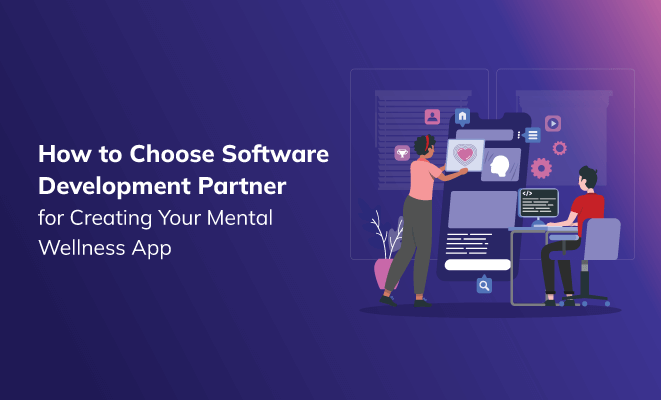
As smartphone and tablet sales have soared in the last few years, the market for mobile applications has grown immensely. This has resulted in exponential growth in the mobile app development industry, creating unprecedented opportunities for businesses to increase their reach and take advantage of a larger, more diverse customer base. As smartphones become more prevalent in human life, people are turning to mobile apps for managing their mental and emotional well-being. This shift to an app-driven ecosystem accompanied by affordable internet access brought a new venue to market your mental health services to an ever-growing audience. Choosing the Right Partner for Your Mental Wellness App Development You might have already ideated the outline of your mental wellness app, but to ensure your mental wellness app lives up to your expectations and end goals, it is essential to partner with an experienced mobile app development company. You may, however, be stuck for the most part in making the right choice. Need a mental wellness app? We’ve got you covered! In the event, that you are clueless about whom to put your bet on for developing your mental wellness app, perhaps the best would be to look for the one who: Has a Good Grasp of Your Target Audience You might have a good sense of the demographic and psychographic characteristics, such as age, gender, location, education, etc. of the users who would be most interested in using your mental wellness app but does your smartphone app developer have the understanding of the needs and preferences of the users who would most benefit from your health app? It will therefore be wise to turn up to the one with a good grasp of your target audience and the one who can design an app that resonates with your users’ specific needs and preferences. Understands Your Service Offerings Take a moment to consider what you expect your mental wellness app to accomplish. Are you aiming to provide your users with tools and resources that can help them cope with stress and anxiety? Are you interested in offering meditation and mindfulness exercises to your customers? Are you planning to give users access to mental health professionals through your wellness app? When looking to hire the best mobile app developers for your mental wellness app, make sure that your app partner is adept enough to understand your service offerings and proficient enough to develop features aligning with your offerings. Can Integrate Priority Features into Your Mental Wellness App As you wrap up determining the target audience and your service offerings, call in your prospective app expert for a convo on identifying and implementing key features that will be useful to your users. Enlist the features, such as cognitive-behavioral therapy (CBT), personalized assessments, guided meditations, mood tracking, stress management tools, or community forums etc., you wish to incorporate into your mental wellness app. An expert with a proven track record of developing health apps is most likely to be capable of integrating the prioritized features you want into your mental wellness app, which means that betting on him for your mental wellness app development will surely be the right call. Adheres to Healthcare Data Regulations and Compliances Your mental wellness app needs to be secure and respect user privacy. It is therefore important to include data access controls, encryption, and two-factor authentication in your security measures in your mental wellness app. It is thus sensible to hire a mobile application developer who can maintain regulatory compliances and frameworks such as the Electronic Health Record Standards (EHR Standards) or the Digital Information Security in Healthcare Act (DISHA). An app development company that adheres to healthcare data regulations and compliances as mentioned when handling users’ sensitive personal data can be an ideal choice for your mental wellness app development. Final Thought A good choice to make whenever it comes to hiring a dedicated mobile app developer is to look for someone who understands the nuances of mental health and the intricacies of app development. Having been assured of your app development company’s exposure to healthcare and mental wellness, its technology stack, the quality of its previous projects, post-sales maintenance and customer service, and the development cost, you can rest easy knowing your app is in the right hands. Start Your App Journey with Digital Innovation With a long history of being part of the tech industry as one of the best app development companies, we at Digital Innovation, have built an imposing array of technology and resources in place to create your mental wellness app. We boast experience and expertise to develop a mental wellness app that is user-friendly, has an intuitive design, and boasts a diverse set of features aimed at supporting mental wellness. If you wish, we can build the kind of mental wellness app that facilitates your work as a mental wellness coach or counselor. Whether you need an app that provides self-assessment tools, mindfulness exercises, or ways to connect with mental health professionals, Digital Innovationcan be your one-stop resource for a custom mental wellness app that fits your vision.
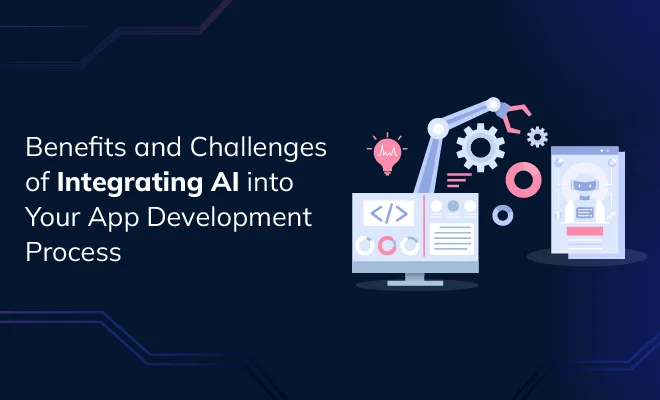
The use of Artificial Intelligence (AI) in our day-to-day life has resulted in a significant change in the way we interact with technology. One key area where this change is very noticeable is the app development process. The integration of AI into app development is helping businesses unlock new avenues of online success—with apps that can think, understand, and anticipate user needs. From streamlining operations to improving personalization, AI’s potential is vast. As a case in point, AI-powered assistants are currently present in over 4 billion devices, and forecasts from Statista indicate a surge to 8.4 billion by 2024. This exponential growth shows the increasing reliance on AI-driven technologies for app development. Infusing AI into the app development process holds a multitude of benefits. Yet, to gain a holistic view of AI’s influence on app development, understanding both its advantages and the obstacles it poses is crucial. Let’s explore the benefits AI brings to the app development process while also addressing the challenges developers could encounter. Benefits of Integrating AI into Your App Development Integrating AI seamlessly into the app development process can open an array of possibilities. AI can reshape an app into a platform that’s laser-focused on users, efficiency, and top-tier security. Let’s thoroughly explore these crucial benefits: 1. Enhanced User Experiences Personalization AI-driven apps have the capability to analyze user behavior and preferences in real-time, creating personalized experiences for users. By understanding user habits, AI can offer tailored content, recommendations, and interactions that increase user engagement. Seamless Interactions through NLP As a subset of AI, Natural Language Processing (NLP) can offer apps with the competence to interpret and respond to human language. NLP can help an app with integration of voice commands, chatbots, and virtual assistants. This can help user interactions that are both intuitive and accessible. 2. Operational Efficiency and Insights I. Automated Tasks and Workflows AI allows developers to focus on more complex and innovative aspects of app creation. It can automate repetitive tasks, such as testing and data entry, accelerating app development timelines. II. Data-Driven Decision Making Integrating AI enables your app to analyze vast amounts of user data, generating insights that help the decision-making process. These insights can guide app improvements and feature enhancements. and overall app development strategy based on real user behavior. 3. Predictive Analytics and User Engagement I. Anticipating User Needs AI can predict user actions and preferences, allowing your app to offer relevant content, products, and services. Anticipating user needs and providing it in advance enhances their app experience and builds a stronger connection with your app. II. Retaining and Delighting Users Through AI-powered algorithms, your app can identify patterns in users’ online activities that indicate their decreased engagement. This can help implement strategies to retain users by offering personalized content and services. 4. Improved Security and Fraud Prevention I. Enhanced Security Measures AI can detect abnormal activities or patterns that indicate potential security breaches or unauthorized access. By constantly monitoring user actions, AI-enhanced security measures can prevent data breaches and protect sensitive user information. II. Real-Time Fraud Detection In the realm of financial and e-commerce apps, AI can identify fraudulent transactions by analyzing transaction data. This capability helps prevent financial losses and safeguards user trust in your app. Challenges That may Arise While Integrating AI into App Development AI’s incorporation into app development has many benefits for app development. However, this journey has its challenges. Let’s assess potential roadblocks that developers might face during AI integration into app development. Here are the possible challenges and their solutions of AI integration into app development: 1. Data Complexity and Quality Collecting Relevant and High-Quality Data The foundation of successful AI integration lies in data. App developers often face the challenge of finding, selecting, and keeping up with big datasets that reflect real-life situations. Therefore, ensuring the quality, accuracy, and diversity of data becomes crucial to building effective AI models. Without reliable data, AI algorithms might produce inaccurate or biased results. Solution: Data Preprocessing and Augmentation through AI To mitigate this challenge, developers need to invest in thorough data preprocessing, cleaning, and augmentation. Techniques like data anonymization, removing outliers, and generating synthetic data can enhance the quality of the dataset. Collaboration with domain experts and using data from various sources can also help ensure a comprehensive dataset. 2. Technical Complexity Selecting the Right Algorithm Choosing the appropriate AI algorithm for a specific app’s requirements can be overwhelming due to the vast array of options available. Picking the wrong algorithm can lead to inefficient resource utilization and suboptimal performance. Solution: Algorithm Evaluation and Testing with AI Developers should thoroughly evaluate different algorithms and frameworks before making a decision. Prototyping and testing different algorithms on subsets of the dataset can provide insights into their performance. Collaboration with an AI app development company or consulting relevant resources can help in selecting the most suitable algorithm. 3. Resource Intensiveness Computational Resources and Scalability AI models can be demanding, requiring significant computational power and memory. This poses a challenge for smaller development teams or startups with limited resources. Moreover, ensuring AI models to accommodate growing user bases can be complex. Solution: Cloud Services and Optimization Leveraging cloud services for computation can help alleviate resource constraints. Cloud platforms offer scalable infrastructure to train and deploy AI models. Additionally, app developers can focus on optimizing models to reduce resource requirements without compromising performance. 4. User Adoption and Trust User Education and Trust Building Integrating AI features into an app might lead to user concerns about data privacy, security, and the reliability of AI-driven functionalities. Gaining user trust and encouraging adoption becomes a challenge. Solution: Transparent Communication and User-Centric Design Developers must communicate clearly about data usage, AI’s role, and the benefits it offers. Transparent privacy policies and user controls over data can enhance trust. User-centric design that prioritizes intuitive AI interactions can foster user acceptance. Integrating AI into app development is beneficial, but we must acknowledge and address the challenges that come with it. By recognizing these obstacles and applying practical solutions, mobile app developers
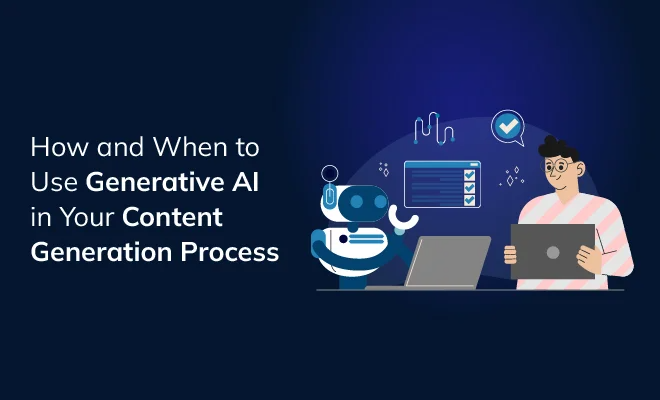
Businesses operating in the digital space have started recognizing content as the key to successful communication and engagement with audience. This has created a demand for high-quality content that captivates users. In response to this increasing demand for quality content, generative AI has emerged as a game-changing solution. This blog pictures the role and benefits of AI to create tailored, impactful content that resonates with specific target audiences. Benefits of Embracing Generative AI for Content Creation Digital content creation these days is marked by a massive transformation, with Generative AI at its nucleus. By embracing this state-of-the-art technology, we can unlock the doors of creativity, efficiency, and innovation in content generation. Generative AI is gaining rapid popularity among content creators and businesses. It offers a fresh approach to content generation. Here’s why it’s becoming a game-changer: I. Efficient and High-Quality Content Generative AI allows machines to autonomously produce creative content. By automating content creation processes, generative AI frees up valuable time and resources for entrepreneurs. This saved time can be redirected towards strategic planning and business growth. II. Diverse Content Types — Text, Images, and Beyond AI-based technology can generate text, images, music, and more, offering versatility for various content needs. Entrepreneurs can also utilize generative AI for various content types, from written articles to multimedia content like images and videos. This diversity in content creation allows ventures to engage with the audience through multiple channels. III. Creativity, Consistency and Quality in Content AI goes beyond mimicking human creativity, producing content that’s innovative and unique. It ensures a consistent level of quality, eliminating human errors and inconsistencies in content. Unlocking Success by Utilizing Generative AI Generative AI can prove to be a strategic asset for entrepreneurial ventures. By leveraging its capabilities in content creation, marketing personalization, brand storytelling, and operational efficiency, entrepreneurs can establish and grow successful ventures in today’s competitive business landscape. Let’s discover how generative AI fuels success startups and entrepreneurial ventures: 1. Personalized Marketing In the era of personalized marketing, generative AI helps entrepreneurs tailor their marketing efforts to individual preferences. I. Customized Campaigns Generative AI can create personalized marketing content, including ad copies, email campaigns, and social media posts. These tailored campaigns resonate more effectively with target audiences, driving engagement and conversions. II. Audience Segmentation Entrepreneurs can use generative AI to identify and segment their audience based on preferences, behavior, and demographics. This segmentation enables more precise targeting, resulting in higher ROI for marketing efforts. 2. Innovation in Brand Storytelling Crafting a compelling brand narrative is essential for entrepreneurial success, and generative AI can be a creative partner in this journey. Unique Brand Content Generative AI can assist entrepreneurs in generating unique content that aligns with their brand’s identity and values. This content could include brand stories, mission statements, and creative narratives that resonate with the target audience. Consistent Branding Ensuring consistent branding across all marketing materials is vital. Generative AI can help maintain brand consistency by generating content in line with established guidelines. 3. Enhanced Operational Efficiency Beyond content creation and marketing, generative AI can enhance operational efficiency, a cornerstone of entrepreneurial ventures. Streamlined Processes AI-driven automation can streamline various operational processes, such as data analysis, customer support, and inventory management. This efficiency reduces operational costs and enhances productivity. Data-Driven Insights Generative AI can analyze vast datasets, providing data-driven insights that guide decision-making. These insights help entrepreneurs make informed choices about product development, marketing strategies, and customer engagement. Scalability As entrepreneurial ventures grow, scalability becomes crucial. Generative AI can adapt to increasing demands, ensuring that operations remain efficient and effective. Generative AI Use Cases Generative AI, with its ability to autonomously produce content and creative outputs, is redefining various industries. Let’s examine the real-world situations where generative AI is proving to be highly influential. Here are some common real-world use cases of Generative AI: 1. Automated Content Creation Generative AI streamlines content generation across different formats, including articles, product descriptions, and technical documentation. Businesses and content creators can rely on AI-powered tools to maintain a consistent flow of high-quality content. This results in time and resource saving while ensuring a strong online presence. 2. Graphic Design and Visual Content Generative AI extends its capabilities to graphic design, creating images, logos, and other visual assets for digital platforms. It empowers designers by automating repetitive tasks, such as layout generation or image synthesis. Graphic designers can focus on more creative aspects while AI handles the groundwork. 3. Music and Art Creation Generative AI can transform art and music. It can compose music, generate art, and even collaborate with human artists. Musicians and artists can use generative AI as a source of inspiration, creating unique pieces or experimenting with novel styles. 4. Language Translation and Localization Language translation benefits from generative AI’s ability to understand and generate text in multiple languages. Translation services powered by AI offer speed and accuracy, making it easier for businesses to communicate with global audiences. Additionally, AI can assist in content localization by adapting it culturally and linguistically. 5. Content Generation for Marketing Generative AI supports marketing efforts by generating marketing copy, social media posts, and ad content. Marketers can utilize AI to tailor messages to specific target audiences, ensuring personalized and effective communication. 6. Video Production and Editing Video production and editing can be time-consuming tasks. Generative AI can streamline these processes by assisting in scriptwriting, generating visual effects, and automating editing tasks. Content creators can produce professional videos efficiently. 7. Content Moderation Generative AI can be used to identify and moderate content across online platforms, ensuring that user-generated content aligns with community guidelines and regulations. This is crucial for social media platforms and online communities. Generative AI’s applications span various domains and industries. It is capable of transforming how businesses operate and engage with their audiences. As technology continues to evolve, its impact on automation and content generation will become increasingly important. Wrap-up Embracing generative AI for content creation signifies more than just a technological leap, it’s a strategic move that is empowering
The e-commerce landscape’s success revolves around your e-commerce store’s ability to quickly and accurately show up in users’ search queries. However, the conventional keyword-oriented search systems often don’t quite measure up to modern user expectations. Here comes Generative AI, a transformative technology reshaping how users explore products on your e-commerce platform. In this blog, we will explore the world of Generative AI and its role in enhancing the search experience on your e-commerce store. We’ll also emphasize the importance of partnering with an AI development company to leverage this transformative technology to improve e-commerce searchability. Why Use Generative AI for E-commerce Search Generative AI applies artificial intelligence algorithms to generate search results that are both dynamic and highly relevant. This differs from traditional search engines, which primarily depend on exact keyword matches. Generative AI, in contrast, understands user intent and context, providing search outcomes that are not only personalized but also accurate. Generative AI for Creating Dynamic and Relevant Results Search results that are dynamic and relevant to users search intent are important. Generative AI can accomplish this by processing vast amounts of data, including user browsing habits, preferences, and past interactions. It can improve search outcomes that harmonize with the needs and preferences of each user. This not only refines the search experience but also increases customer retention. A Common Case for Better Understanding Let’s imagine a scenario where a user is looking for a new smartphone in an e-commerce store. In a conventional keyword-centric search system, the user might type in a basic query like “smartphone.” In response, the search engine would produce a list of smartphones, often solely relying on the presence of the keyword “smartphone” in the product listings. This method can yield a flood of results, many of which may not match the user’s unique requirements. On the other hand, Generative AI considers a range of elements, such as the user’s previous search history, browsing habits, and product preferences. It acknowledges the possibility that the user may favor a particular brand, screen size, or price range. Consequently, it shows search results that are customized to the user’s liking, featuring the most suitable smartphone choices prominently in the search results. Enhancing Product Discoverability through Generative AI Generative AI helps in personalising search. It can understand the context of user queries, considering factors like user history, preferences, and even the intent behind the search. This enables an e-commerce portal to provide users with highly personalized product recommendations based on their search history and behavior. Here is how Generative AI can help with Product Discoverability: I. Enriching Product Descriptions and Tags Traditional approaches often rely on manual tagging and product descriptions, which can be time-consuming and prone to errors. Generative AI can enrich product descriptions and tags for improving product discoverability on an e-commerce store. II. Enhancing Product Information Generative AI can be utilized for generating descriptive and accurate metadata for your products. It can analyze product images, user reviews, and other data sources to create rich product descriptions and relevant tags automatically. This not only saves time but also ensures that your product listings are highly informative and captivating for your potential buyers. Natural Language Processing (NLP) for Intuitive Searches Generative AI employs Natural Language Processing (NLP) capabilities to ensure uniform and accurate responses to user searches. For example, if a user frequently searches for running shoes, the AI can understand this context and recommend related products, such as workout gear or athletic wear. This level of personalization enhances the user experience and increases the likelihood of conversions. Here’s a closer look at how Natural Language Processing can contribute to improving e-commerce search: Contextual Understanding and Recommendations Unlike traditional keyword-based search systems, users can input queries in their own words, and the AI will still provide accurate results. This user-friendly and natural approach to searching enriches the overall user experience. Users are freed from the need to guess specific keywords to find their desired items. This results in improved user experience and an improvement in search precision. Catalog Management and Tagging Efficient catalog management is crucial in e-commerce, as it impacts how products are organized, discovered, and presented to users. Generative AI streamlines catalog management by automating tagging processes. It can analyze product images, descriptions, and other data sources to generate relevant tags automatically. This reduces manual efforts, minimizes errors, and ensures that products are accurately categorized and easily searchable. Generative AI for Accurate Demand Prediction and Inventory Management Demand prediction and inventory management are important in e-commerce, as they directly impact the availability of products to customers. Accurate demand prediction ensures that you have the right amount of stock, reducing the risk of stockouts or overstocking. Let’s uncover how Generative AI is reshaping e-commerce search by incorporating demand prediction and inventory management optimization: AI Insights for Demand Prediction Generative AI can provide valuable insights into demand by analyzing search trends and user behavior. It can identify emerging trends and popular products, helping you make informed decisions about your inventory. Optimized Inventory Management With AI-powered demand prediction, you can optimize your inventory management, leading to improved customer satisfaction. Users can find the products they want when they want them, enhancing their overall shopping experience. Voice and Visual Search Integration Voice search, powered by voice assistants like Siri, Google Assistant, and Alexa, has gained immense popularity. Users now expect the convenience of hands-free searching, and businesses are adapting to meet this demand. Conversely, visual search empowers users to commence product searches with ease by uploading an image. This proves highly beneficial when users aim to locate a product, they’ve come across elsewhere or already have an image of. Harnessing Generative AI for Voice Search Voice search relies on natural language processing (NLP) to understand and interpret spoken queries. Generative AI, with its advanced NLP capabilities, takes voice search to the next level. Here’s how: Improved Accuracy Generative AI can process and understand spoken language with remarkable accuracy. It recognizes accents, dialects, and colloquial language, ensuring that user queries are interpreted
- 1
- 2